





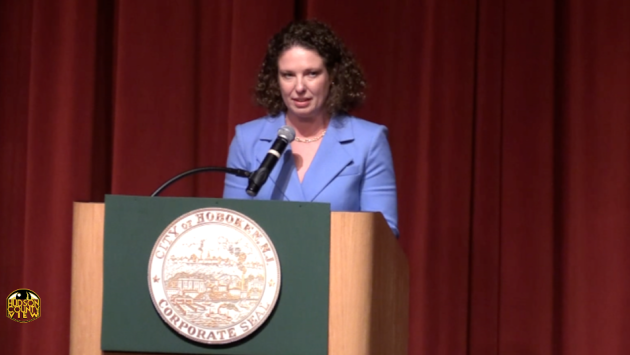


After the City of Hoboken was assigned a negative bond rating by S&P Global Ratings earlier today, Mayor Emily Jabbour is vowing to change their budgeting process.
By John Heinis/Hudson County View
“The structural issues identified by S&P were developed over multiple budget cycles during periods of rising costs and economic uncertainty. Hoboken used emergency funds to minimize short-term tax impacts, but that approach is not sustainable,” she said in a statement.
“As mayor, it is my responsibility to confront these challenges directly and restore structural balance to put the city on a stronger long-term path. While the city remains financially stable and continues to meet all of its obligations, this outlook underscores the need to take corrective action now.”
While the current overall rating remains unchanged at AA+, the negative outlook signals that the credit rating agency sees risk that could lead to a downgrade in the next 12 to 24 months if the city’s financial position does not improve.
A lower bond rating would likely increase the cost of borrowing for capital projects like infrastructure improvements, placing additional pressure on taxpayers, and reducing the city’s financial flexibility.
“The outlook revision reflects the city’s projected fund balance declines, which are partially attributable to rising costs and insufficient property tax adjustments to offset the shortfalls,” the S&P analysis says.
Specific concerns identified include the use of reserves to support day-to-day operations, delays in fully funding known recurring obligations (such as labor contracts), rising inflation and increased service demands, rising healthcare costs, and rising costs outpacing revenue growth allowed under New Jersey municipal budget laws.
Six of the past eight Hoboken municipal budgets under now former Mayor Ravi Bhalla came with a tax increase.
The two exceptions are a tax decrease in 2021, largely due to American Rescue Plan funds issued in response to the COVID-19 pandemic, and a flat tax rate in 2018. Jabbour was a councilwoman at-large during Bhalla’s tenure and she voted for each budget.
In light of today’s financial report, Jabbour is calling for aligning recurring revenues with recurring costs, preserve reserves for their intended purpose, and making financially responsible decisions that are fair to current and future residents.
She plans to do that by launching a new annual budget process that begins with a public survey and also includes a series of open workshops before introducing a proposed budget.
According to Jabbour, this will foster an open dialogue about spending tradeoffs and revenue limitations, as well as provide lear communication before a formal budget is introduced.
“This is not about assigning blame; it’s about rolling up our sleeves and addressing these long-standing budgetary issues through honest conversations and difficult choices,” she added.
“There are no quick fixes, but residents deserve to understand the full picture of the financial landscape and have a voice in shaping the path towards long-term fiscal responsibility.”
Additional details regarding the public survey and workshop schedule will be announced in the coming days.
Hudson County View
Comments
Spotify Beats MLC Audiobook Lawsuit After Judge Calls Federal Royalty Rules